










-
Perma Blend Scar Ash Dermis PMU Pigment | Cool MixerAchieving a seamless skin camouflage on lighter complexions without scar tissue healing out to an unwanted, ruddy pink or rusty orange tone is a constant challenge in paramedical tattooing. Fighting unexpected warmth shifts on fair skin creates stressful clinical bottlenecks. Enter your new baseline:...
- Regular price
- Regular price
-
- Sale price
- Unit price
- per
-
Perma Blend Scar Brown Dermis PMU Pigment | Versatile BaseAchieving a seamless scar camouflage on medium to deeper complexions without mismatching underlying skin tones is a constant challenge in paramedical tattooing. For cosmetic tattooists, choosing an incorrect foundational base on compromised skin creates stressful workflow bottlenecks. Enter your new baseline: Perma Blend Scar...
- Regular price
- Regular price
-
- Sale price
- Unit price
- per
-
Perma Blend Scar No Gray Dermis PMU Pigment | Warm MixerNothing compromises a paramedic tattooist's reputation faster than delicate scar camouflage healing out to an unwanted, ashy grey or flat blue tone. Fighting unwanted cool shifts on compromised skin creates major clinical bottlenecks and client anxiety. Enter your new baseline: Perma Blend Scar No...
- Regular price
- Regular price
-
- Sale price
- Unit price
- per
-
Perma Blend Scar Pink Dermis PMU Pigment | Warm MixeAchieving a seamless skin camouflage on lighter complexions without scar tissue healing out too grey or ashy is a major hurdle in paramedical tattooing. For cosmetic tattooists, incorrect warmth calibration on fair skin creates stressful clinical bottlenecks. Enter your new baseline: Perma Blend Scar...
- Regular price
- Regular price
-
- Sale price
- Unit price
- per
-
Perma Blend Scar Dark Dermis PMU Pigment | Cool MixerAchieving a seamless scar camouflage on deeper, cooler complexions without the pigment looking muddy or washing out is a major challenge in paramedical tattooing. Fighting incorrect depth and undertone calibration on melanin-rich skin creates stressful clinical bottlenecks. Enter your new baseline: Perma Blend Scar...
- Regular price
- Regular price
-
- Sale price
- Unit price
- per

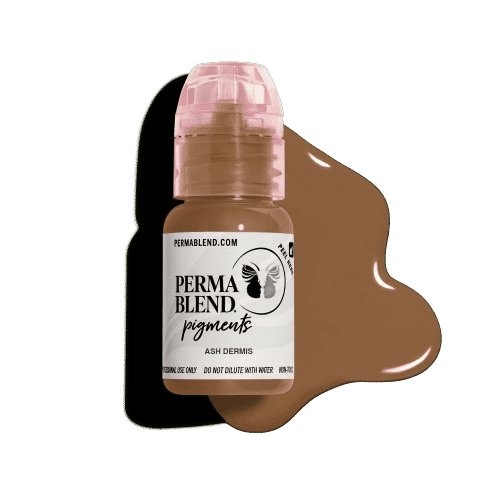


Camouflaging avascular, fibrotic tissue is notoriously unpredictable. Thin, watery inks often result in patchy retention or rapid colour shifting. If you are struggling with scar pigments that don't heal orange or ash out on complex stretch marks, you need a highly stable, opaque formulation designed specifically for compromised dermal layers.
The Paramedical Scar PMU Pigments collection is a professional-grade wholesale pmu scar ink range specifically engineered to deliver true-to-skin opacity and stable healing on reconstructive and surgical scarring. This comprehensive collection includes our cosmetic (PMU) and paramedical tattoo scar pigments in various tones, ensuring you have the exact shade depth required to seamlessly blend fibrous tissue into the surrounding native dermis.
Clinical Benefits for the Paramedical Artist
- High-Opacity Titanium Dioxide Base: Ensures maximum coverage over blanched or hypopigmented scars, reducing the need for aggressive, trauma-inducing needle passes that could re-trigger the inflammatory response.
- Stable Organic/Inorganic Hybrids: Prevents the pigment from shifting tone post-healing, offering exceptional titanium dioxide scar pigment retention even on densely textured surgical scars.
- Optimised Viscosity: The creamy consistency allows for flawless pointillism and stippling techniques, ensuring the pigment drops cleanly from the needle tip without pooling in the cartridge reservoir.
- Gamma-Sterilised & Biocompatible: Rigorously tested for safe implantation into immunocompromised or highly sensitive post-surgical tissue, adhering strictly to Australian clinical safety standards.
Expand your paramedical and cosmetic trolley today. Whether you require specific shading solutions and pigment correctors to sheer out your camouflage mixes, are stocking up on Permablend for areola restoration, exploring the rich undertones of Tina Davies, or discovering the Monica Ivani signature series for brow work, we have your clinic covered.
Read Product Specifications & Pro Tips ▼
Technical Dilution & Mixing Protocols
- Base Composition: High-density titanium dioxide mixed with stable iron oxides, suspended in a glycerin-heavy carrier fluid to prevent immediate drying during lengthy 3-hour camouflage sessions.
- Dilution Ratios: To match complex skin undertones seamlessly, rely on standard pmu scar camouflage mixing ratios (typically 3:1 Base Dermis Tone to Warm/Cool Modifier). Never dilute with sterile water, as this alters the chemical binder; only use brand-specific shading solutions to sheer out the opacity for softer stretch mark blending.
Critical Paramedical Aftercare
Scar tissue lacks normal sebaceous gland function and vascularity. Instruct clients to dry heal for 72 hours, gently dabbing lymph fluid with a sterile, damp cotton pad every 2 hours on the first day. This prevents thick scabs that pull heavy titanium particles out of the dermis. After 72 hours, they must apply a rice-grain amount of breathable, non-occlusive PMU ointment twice daily to support the compromised skin barrier.
Professional FAQ & Troubleshooting
What is the best PMU ink for stretch marks and deep surgical scars? ▼
The ideal inks for stretch marks (striae) and surgical scars are high-opacity, titanium-based hybrid pigments. Because scar tissue is structurally different from healthy dermis, sheer organic brow or lip pigments will not retain or provide enough coverage. You must use heavily concentrated paramedical pigments that can physically block out the stark white or hyperpigmented tones of the fibrotic tissue.
Why do my scar camouflage treatments sometimes heal orange or yellow? ▼
Healing orange or yellow is usually caused by over-warming the pigment mix or implanting it too superficially. When working on scars, artists often overcompensate for the stark white tissue by adding too much warm modifier (yellow/orange base). As the titanium dioxide settles and the skin fully exfoliates over 60 days, the heavy yellow modifiers become hyper-visible. Always swatch your mix on the client's jawline and let it dry to check the true oxidised tone before implanting.
How do I manage pigment retention on dense, raised, or fibrotic tissue? ▼
Dense, fibrotic tissue resists pigment implantation. Before attempting to camouflage a raised or hardened scar, you must first perform a series of MCA (Multitrepannic Collagen Actuation / Dry Needling) treatments to flatten the scar and rebuild the vascular network. Once the scar is flat and white, use a multi-prong needle (like a 3RL or a small curved mag) and a slow machine speed to gently stipple the high-viscosity pigment into the tissue without causing micro-tears.
Recently Viewed Products
LUNA
Example product title
- Regular price
- Regular price
-
- Sale price
- Unit price
- per
LUNA
Example product title
- Regular price
- Regular price
-
- Sale price
- Unit price
- per
LUNA
Example product title
- Regular price
- Regular price
-
- Sale price
- Unit price
- per
LUNA
Example product title
- Regular price
- Regular price
-
- Sale price
- Unit price
- per
LUNA
Example product title
- Regular price
- Regular price
-
- Sale price
- Unit price
- per
LUNA
Example product title
- Regular price
- Regular price
-
- Sale price
- Unit price
- per
LUNA
Example product title
- Regular price
- Regular price
-
- Sale price
- Unit price
- per
LUNA
Example product title
- Regular price
- Regular price
-
- Sale price
- Unit price
- per
LUNA
Example product title
- Regular price
- Regular price
-
- Sale price
- Unit price
- per
LUNA
Example product title
- Regular price
- Regular price
-
- Sale price
- Unit price
- per
- Choosing a selection results in a full page refresh.